Faith was never meant to be silent. It was never meant to be passive or tucked away in our minds. Scripture calls us to carry a faith that speaks, stands, and refuses to move—and that kind of faith begins with knowing what God has said and daring to believe it. 2 Corinthians 4:13 NKJV says, “And since we have the same spirit of faith, according to what is written, ‘I believed and therefore I spoke,’ we also believe and therefore speak,”.
So, what do you do when problems try to push at you? We PUSH BACK! When fear whispers, when temptation knocks, or when circumstances contradict God’s promises—what comes out of your mouth? For many believers, the gap between “knowing the Word” and “living by the Word” is bigger than we admit. There’s a Hawaiian Word that I always tell myself when things get hard: HOLOMUA. It means to progress, move forward, to keep going despite the obstacles. In Hawaiian culture, it reflects perseverance and moving toward a better version of yourself, or your situation. Little by little, His Word shows us that healing isn’t passive; it requires participation. For you and me to “holomua”!
One of many practical ways we apply our faith is through prayer. To start off, silent prayers are not a bad thing. God hears the thoughts of our hearts, but Jesus’ example shows something powerful: He used His voice. Spoken prayers align your heart with your words, strengthens faith, pushes back against fear, lies and temptation, and it models your faith to others.
And remember–Jesus also spoke to storms, sickness, demons, trees and mountains! His faith was vocal. Every time the Gospels describe Jesus praying, it’s either spoken out loud, cried out, said, declared, or heard by others. At Lazarus’ tomb, he cried with a loud voice. In Gethsemane, the disciples heard Him praying. On the cross, His prayers were spoken aloud. When blessing food, He said grace out loud. Even when He prayed alone, Scripture uses words like said, cried, prayed, asked, declared — all verbal actions.
We’ve all faced moments where our emotions were louder than our faith. That could’ve been a diagnosis, a financial hit, or maybe a relationship strain. In those moments, what we believe about God’s Word becomes painfully clear that our faith isn’t proven in comfort, but it’s tested and proven in conflict. As much as we would love to avoid problems and be stress-free in life, Jesus reminds us that He didn’t come so that conflict would stop. He came so that we could receive and live a radically different life! He came so that we could stand firm, live by His truth, and walk in His peace even when trouble arises.
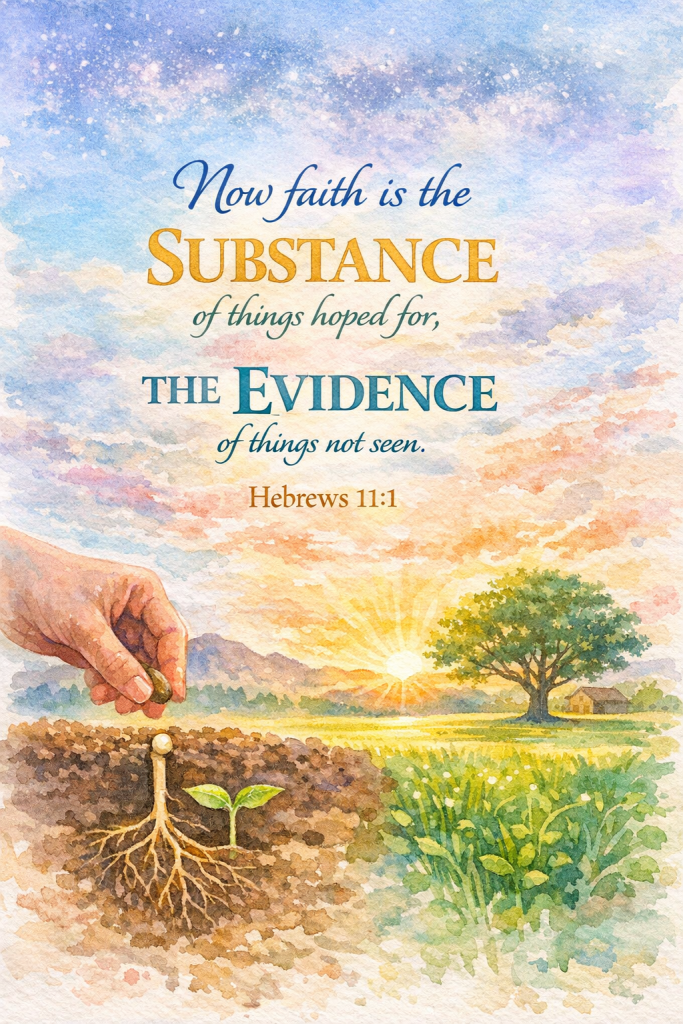
Hebrews 11:1 reminds us that Faith is active trust, not passive belief. It moves us to speak, act, and stand on God’s Word.
Over the years of dealing with anxiety and depression, God’s Word taught me that I need to apply my faith by speaking His promises out loud. Even when my feelings scream the opposite.
His Word reminds you and I to stand on the truth, not our emotions! Faith is not something you admire from a distance—it’s something you practice in the middle of real life. God never asked you to feel strong; He asked you to stand strong. He never demanded that you see the whole picture; He simply calls you to trust the One who does. Every time you choose to speak His Word over your emotions, your fears, or your circumstances, you are exercising a faith that pleases Him and transforms you.
You don’t have to have perfect faith! Just a willing heart and a mouth that agrees with God. He meets you in the middle of the battle, strengthens you as you stand, and honors every step you take toward Him.
Reflective Question: How can you align your words this week with what God has already promised?
 Covered Under His Wings
Leave a comment